
Latest News

The Return of Supersonic Flight: Two Divergent Paths to Overcome the Sound Barrier
Friday, 07 August 2026 - 13:07 | Views - 963
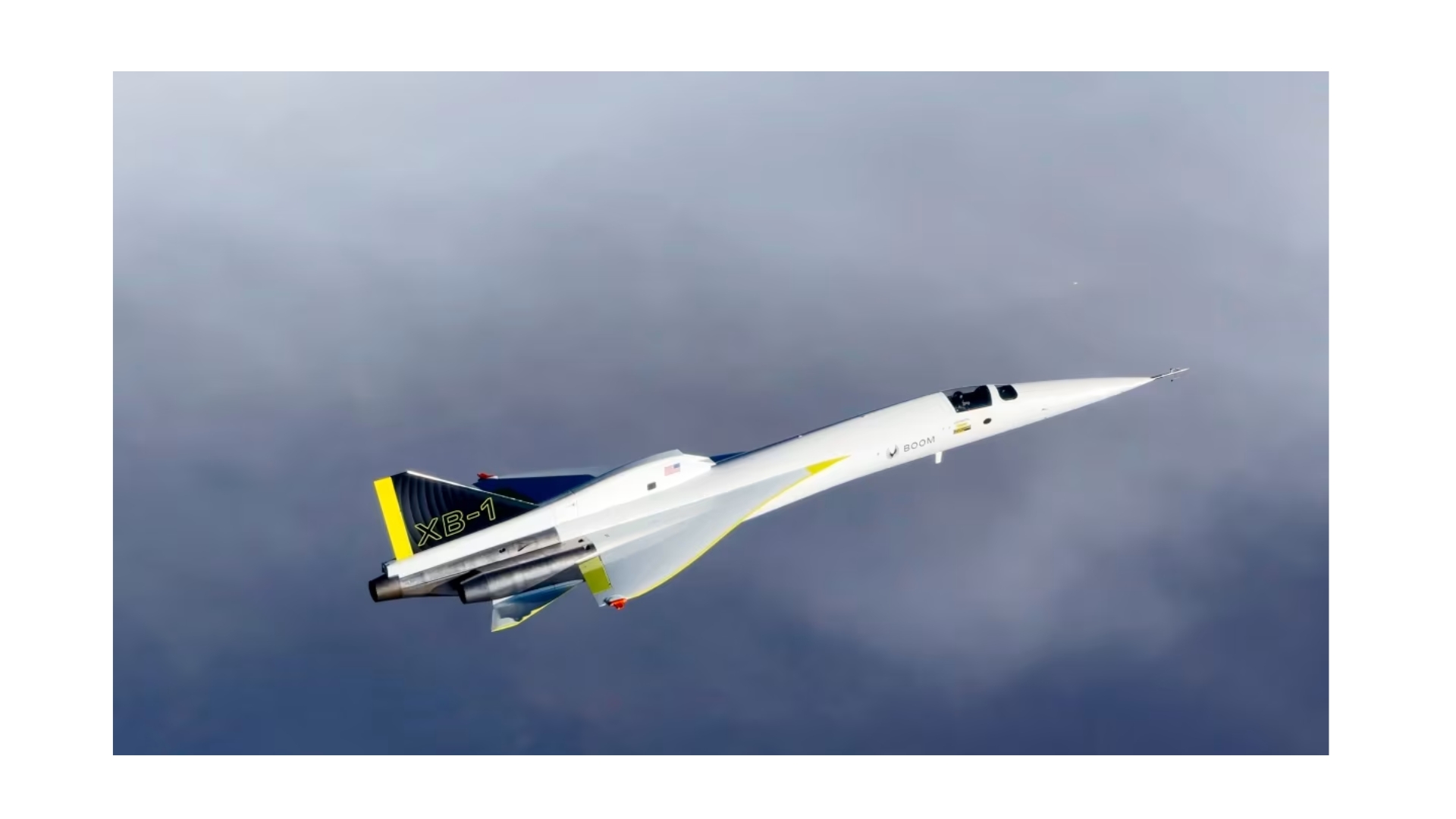
Decades after the retirement of the iconic Concorde, commercial supersonic flight is poised for a major comeback. Propelled by evolving regulations and a new generation of aerospace engineering, the aviation industry is closer than ever to breaking back through the sound barrier for everyday passengers.
However, one major hurdle that grounded the industry decades ago remains: the sonic boom.
The Shadow of 1964 and the 1973 Overland Ban
The modern regulatory push faces ghosts from the past. In 1964, the Federal Aviation Administration (FAA) subjected Oklahoma City to 1,253 intentional sonic booms over six months to gauge public reaction. While a University of Chicago survey later reported that 73% of residents felt they could live with the noise, the tests sparked immediate lawsuits, roughly 12,400 complaints, and required the FAA to pay compensation for property damage.
This backlash catalyzed political opposition, leading Congress to cancel funding for Boeing’s proposed 2707 supersonic transport in 1971. By 1973, the FAA enacted a strict prohibition against civil aircraft flying faster than Mach 1 over land in the United States.
The Concorde—which entered service in 1976—was restricted primarily to transoceanic routes like New York to London. High operating costs, community opposition, a tragic 2000 crash, and the lack of profitable domestic overland paths ultimately sealed its fate, sending it to retirement in 2003.
Reimagining Regulations for a New Era
Nearly 50 years after the overland ban, the regulatory landscape is shifting. In June, the FAA proposed reimagined rules that replace the rigid speed-based standard with a noise-based one, aiming to finalize these updated standards by mid-2027.
The FAA’s proposed surface sound pressure limit for overland supersonic flight is set at 0.11 pounds per square foot—equal to a moderate "thump." By comparison, the 1964 Oklahoma City tests produced shocks as intense as 1.6 pounds per square foot (over 14 times higher than the proposed limit).
To meet these new thresholds and make overland supersonic travel commercially viable, two fundamentally different technological approaches are currently racing toward the finish line.
Approach 1: Mach Cutoff (“Boomless Cruise”)
Colorado-based Boom Supersonic is taking a physics-based approach to prevent sonic booms from ever reaching the ground, regardless of the airplane's shape.
-
How it works: Known as Mach cutoff or "boomless cruise," the technique requires an aircraft to fly at a higher altitude (generally above 30,000 feet) and rely on advanced computational software to calculate the most efficient speed based on real-time wind and temperature distributions.
-
The Physics: When executed correctly, atmospheric changes bend the shock wave upward before it hits the ground, resulting in zero audible sonic boom reaching people below.
-
The Overture Airliner: Boom successfully demonstrated Mach cutoff using its single-seat XB-1 prototype, making it the first privately developed jet to break the sound barrier. The company is now developing its pre-production Overture airliner—designed to carry 60 to 80 passengers at Mach 1.7 over water and cut travel times in half (such as a 3.5-hour flight from New York to Los Angeles) within the next four years.
-
Limitations: Critics point out that Mach cutoff restricts speeds to a narrow window (typically Mach 1.1 to 1.3), increases fuel consumption, and is heavily dependent on favorable weather and atmospheric conditions.
Approach 2: Low-Boom Aircraft Shaping
NASA is taking a radically different, design-centric approach through its Quesst mission and the experimental X-59 aircraft.
-
How it works: Instead of relying on navigation tricks or speed limits, the X-59 features a sleek, peculiar shape with an elongated nose, ultra-smooth underside, and no front-facing window (relying instead on a 4K high-definition digital cockpit screen).
-
The Physics: Traditional supersonic planes generate a heavy, concentrated shock wave at the nose and tail. The X-59 is designed to space out and equalize shock waves along its airframe so they do not fully merge in flight. The result on the ground is not a loud bang, but a gentle "thump" comparable to a car door shutting 20 feet away.
-
The Goal: NASA plans to use data from the X-59 to help the International Civil Aviation Organization (ICAO) set global regulations by 2031, paving the way for unrestricted supersonic speeds over land.
-
Limitations: While aerospace experts note that low-boom shaping principles could revolutionize smaller business jets (15 to 20 passengers), critics like Boom CEO Blake Scholl argue that scaling the design up to a large airliner would require an aircraft the length of a football field, making it an impractical commercial prototype.
Looking Ahead: Coexistence or Competition?
As both approaches mature, the future of supersonic travel remains an open question. Whether airlines lean toward software-driven Mach cutoff for quicker market entry or advocate for future low-boom design frameworks, the return of faster-than-sound travel is no longer a matter of if, but how.
Ultimately, the revival will depend on real-world community testing, the evolution of sustainable aviation fuels (SAF) to offset higher emissions, and how regulators balance public peace of mind with the undeniable demand for speed.
taken from CNN







Monday, 27 July 2026 - 9:40
After years dominated by hyper-saturated trend cycles and sleek, ultra-smooth minimalism, fashion has...

Monday, 20 July 2026 - 9:35
The era of hyper-rigid seasonal dress codes has quietly dissolved. Where personal style once demanded...

Monday, 08 June 2026 - 18:35
There was a time when sleek, unadorned surfaces and flat printed graphics defined what it meant to be...



Wednesday, 23 September 2026

Tuesday, 25 August 2026

Thursday, 13 August 2026


Tuesday, 18 August 2026

Tuesday, 28 July 2026

Monday, 20 July 2026

Friday, 15 May 2026