
Latest News

What You Should Know Before You Begin Juicing At Home
Thursday, 02 March 2017 - 11:08 | Views - 815
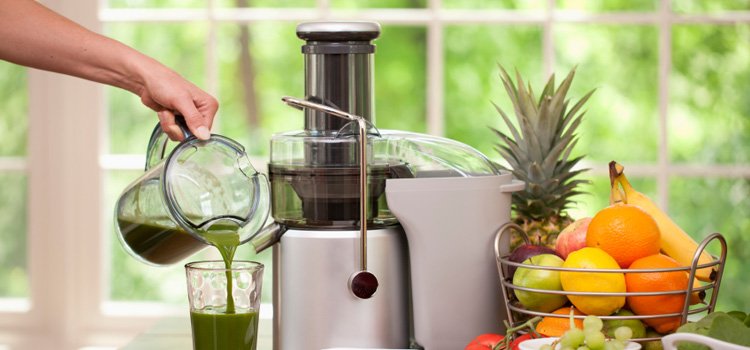
Gone are the days when orange and apple were your only options, and welcome to a world where dark leafy greens and beet-carrot-turmeric blends are now par for the course.
Juicing has never been hotter, and though juiceries are popping up left and right, it’s also possible to create your daily fix of raw goodness at home with the right equipment, ingredients, and know-how.
The Difference Between Juice and a Smoothie
Smoothies consist of blended whole fruits and vegetables with pulp and fiber included in the end product.
Juices, on the other hand, contain only the extracted liquid from these raw ingredients.
Smoothies tend to be more filling, but the lack of mass in juices means your body can absorb the nutrients without requiring much digestive work.
The Different Kinds of Juicers Available
Though a manual press works fine to juice the occasional citrus fruit, to whip up more complicated concoctions, you’ll want to invest in an electric juicer, of which there are two types for home use.
A centrifugal juicer uses a fast-spinning blade to draw out liquid.
A masticating juicer slowly “gnaws” on produce to release liquid, which some say results in better taste and lower oxidation and nutrient loss.
The Amount of Produce Required
If you’ve only made smoothies before, the ingredients needed for a single juice recipe may surprise you.
For example, a basic green juice might require 2 apples, 1 cucumber, 2 cups kale, 2 celery stalks, 1 lemon, and ginger.
Though the heaps of produce (and price tag, especially if you buy organic) can be daunting, you can at least get your daily recommended fruit and vegetable intake in one delicious go.
The Shelf Life of Fresh Juice
For the best taste and optimal nutritional benefits, fresh juice should ideally be consumed within 30 minutes or as soon as possible after extraction.
However, with proper storage, your juice can keep for up to 72 hours.
The best way to store raw juice is in a reusable glass jar that seals tightly to prevent any oxidation.
The Importance of Cleaning Your Juicer Immediately
Always clean your juicer as soon as possible after use.
The leftover liquid, pulp, and fiber can easily stick to blades and other juicer parts and become very difficult to remove if given the opportunity to dry.
Invest in a brush or sponge that can get to every nook and cranny, and pay attention to how easily a juicer can be cleaned (number of parts, awkward angles, etc.)) when selecting one for your home.
Juicing has never been hotter, and though juiceries are popping up left and right, it’s also possible to create your daily fix of raw goodness at home with the right equipment, ingredients, and know-how.
The Difference Between Juice and a Smoothie
Smoothies consist of blended whole fruits and vegetables with pulp and fiber included in the end product.
Juices, on the other hand, contain only the extracted liquid from these raw ingredients.
Smoothies tend to be more filling, but the lack of mass in juices means your body can absorb the nutrients without requiring much digestive work.
The Different Kinds of Juicers Available
Though a manual press works fine to juice the occasional citrus fruit, to whip up more complicated concoctions, you’ll want to invest in an electric juicer, of which there are two types for home use.
A centrifugal juicer uses a fast-spinning blade to draw out liquid.
A masticating juicer slowly “gnaws” on produce to release liquid, which some say results in better taste and lower oxidation and nutrient loss.
The Amount of Produce Required
If you’ve only made smoothies before, the ingredients needed for a single juice recipe may surprise you.
For example, a basic green juice might require 2 apples, 1 cucumber, 2 cups kale, 2 celery stalks, 1 lemon, and ginger.
Though the heaps of produce (and price tag, especially if you buy organic) can be daunting, you can at least get your daily recommended fruit and vegetable intake in one delicious go.
The Shelf Life of Fresh Juice
For the best taste and optimal nutritional benefits, fresh juice should ideally be consumed within 30 minutes or as soon as possible after extraction.
However, with proper storage, your juice can keep for up to 72 hours.
The best way to store raw juice is in a reusable glass jar that seals tightly to prevent any oxidation.
The Importance of Cleaning Your Juicer Immediately
Always clean your juicer as soon as possible after use.
The leftover liquid, pulp, and fiber can easily stick to blades and other juicer parts and become very difficult to remove if given the opportunity to dry.
Invest in a brush or sponge that can get to every nook and cranny, and pay attention to how easily a juicer can be cleaned (number of parts, awkward angles, etc.)) when selecting one for your home.







Monday, 27 July 2026 - 9:40
After years dominated by hyper-saturated trend cycles and sleek, ultra-smooth minimalism, fashion has...

Monday, 20 July 2026 - 9:35
The era of hyper-rigid seasonal dress codes has quietly dissolved. Where personal style once demanded...

Monday, 08 June 2026 - 18:35
There was a time when sleek, unadorned surfaces and flat printed graphics defined what it meant to be...



Tuesday, 25 August 2026

Thursday, 13 August 2026

Wednesday, 05 August 2026


Tuesday, 18 August 2026

Tuesday, 28 July 2026

Monday, 20 July 2026

Friday, 15 May 2026