
Latest News

8 Mistakes You're Making with Your Lipstick
Saturday, 16 May 2015 - 3:16 | Views - 1,426
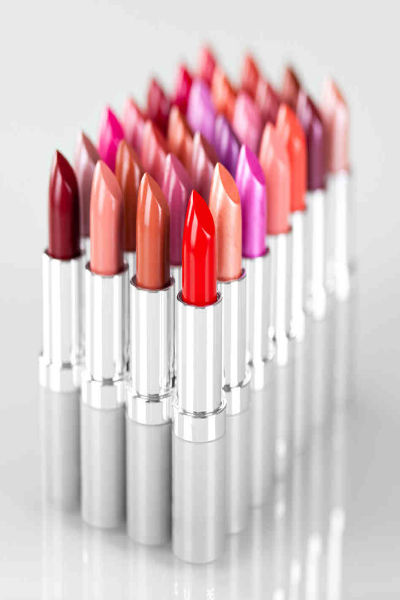
Mistake #1: You're not moisturizing
When it comes to skincare, there's no step that's more important and the same goes for your lips.
When it comes to skincare, there's no step that's more important and the same goes for your lips.
You've got to apply lip balm persistently for smooth, crack-free lips.
Mistake #2: You're not exfoliating your lips enough
If there's one thing that's going to ruin an immaculately-painted pout, it's flakes. Results last longer on a smoother surface.
But if you start to notice flaking, it's best to clean off your lips and start from scratch.
To gently banish dead skin cells, use a gentle scrub with moisture.
Mistake #3: You're not priming your lips
Primer adds a smoothing layer of moisture that's a perfect color-free base for underneath your lipstick. It's the ultimate blank canvas.
Mistake #4: You're not using a lip liner
A waxy lip liner serves as a barrier between the formula and the outside of your lips.
Line along the lips outer edge to enhance their shape and prevent color bleeding.
Make sure you're using a color that matches your lipstick perfectly or a clear formula if you're worried about treading into '90s territory.
Mistake #5: You're beginning to apply lipstick at the wrong place
A tricked learned from a fellow editor, you should always start at the center of your lips and move outward.
It's the best way to quell shakiness when you reach the ever-tricky outer lines of your lips.
Mistake #6: You're not setting your lips
While formula plays its part greasier formulas will always bleed more you should always safeguard your lip color by holding a tissue over your pout and lightly dusting on face foundation or translucent powder with a brush.
Mistake #7: You're not blotting
Lipstick all over your coffee cup or worse, your teeth? That's a direct result of going too heavy on your application and not dabbing off the excess afterwards. To ensure no unsightly oozing, simply place a tissue between your lips and pat lightly.
Mistake #8: You're not paying attention to undertones
Take it from us, all is lost if you don't have the right shade of your choice color.
As a rule of thumb, remember that blue-based shades (classic red) complements people with fair skin tones, while orange-based shades (brick red) complements warmer skin tones.
Mistake #2: You're not exfoliating your lips enough
If there's one thing that's going to ruin an immaculately-painted pout, it's flakes. Results last longer on a smoother surface.
But if you start to notice flaking, it's best to clean off your lips and start from scratch.
To gently banish dead skin cells, use a gentle scrub with moisture.
Mistake #3: You're not priming your lips
Primer adds a smoothing layer of moisture that's a perfect color-free base for underneath your lipstick. It's the ultimate blank canvas.
Mistake #4: You're not using a lip liner
A waxy lip liner serves as a barrier between the formula and the outside of your lips.
Line along the lips outer edge to enhance their shape and prevent color bleeding.
Make sure you're using a color that matches your lipstick perfectly or a clear formula if you're worried about treading into '90s territory.
Mistake #5: You're beginning to apply lipstick at the wrong place
A tricked learned from a fellow editor, you should always start at the center of your lips and move outward.
It's the best way to quell shakiness when you reach the ever-tricky outer lines of your lips.
Mistake #6: You're not setting your lips
While formula plays its part greasier formulas will always bleed more you should always safeguard your lip color by holding a tissue over your pout and lightly dusting on face foundation or translucent powder with a brush.
Mistake #7: You're not blotting
Lipstick all over your coffee cup or worse, your teeth? That's a direct result of going too heavy on your application and not dabbing off the excess afterwards. To ensure no unsightly oozing, simply place a tissue between your lips and pat lightly.
Mistake #8: You're not paying attention to undertones
Take it from us, all is lost if you don't have the right shade of your choice color.
As a rule of thumb, remember that blue-based shades (classic red) complements people with fair skin tones, while orange-based shades (brick red) complements warmer skin tones.







Monday, 27 July 2026 - 9:40
After years dominated by hyper-saturated trend cycles and sleek, ultra-smooth minimalism, fashion has...

Monday, 20 July 2026 - 9:35
The era of hyper-rigid seasonal dress codes has quietly dissolved. Where personal style once demanded...
Monday, 08 June 2026 - 18:35
There was a time when sleek, unadorned surfaces and flat printed graphics defined what it meant to be...



Tuesday, 25 August 2026

Thursday, 13 August 2026

Wednesday, 05 August 2026


Tuesday, 18 August 2026

Tuesday, 28 July 2026

Monday, 20 July 2026

Friday, 15 May 2026