
Latest News

Powerful earthquake hits Tibet killing 16 people, reports say
Friday, 23 October 2026 - 12:12 | Views - 31
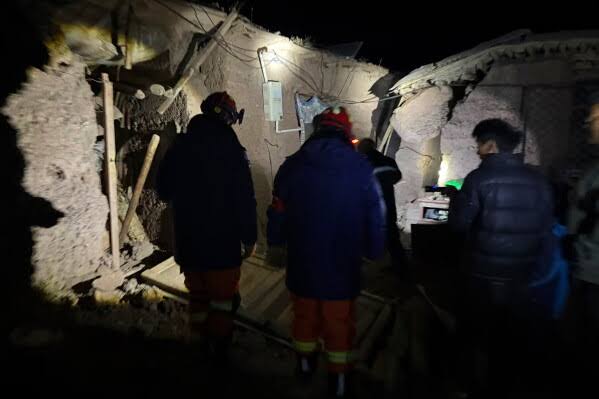
A magnitude 7.0 earthquake has hit a mountainous region in Tibet, killing at least 16 people and injuring dozens, according to Chinese state media reports.
The centre of the quake hit Baqên County in the Nagqu regionas on Thursday night, Xinhua reported, citing the local emergency management bureau.
The county - located in what China calls the Tibet Autonomous Region after annexing it in the 1950s - is 400km north-east of the region's capital, Lhasa.
Authorities have declared the incident an emergency and deployed rescue teams to the affected area, where 65 others have been injured, including 11 people with severe injuries.
The electricity supply has been cut off and 339 homes have collapsed in the affected region, though by Friday morning there were reports of power restored in some areas.
Local media said more than 12,400 people have been relocated after the earthquake.
Rockfall has forced roads in the region to close, making it more difficult for crews to reach impacted high-altitude areas.
The US Geological Survey (USGS) has recorded seven tremors close to the epicentre, all of which are located in the mountainous region. The largest tremor was recorded at 5.2 magnitude at a depth of 10km.
Shallow earthquakes and tremors closer to the Earth's surface are more damaging than deep quakes.
Several survivors of the earthquake have told local media about their harrowing escape from the tremor.
Speaking to Tibet Daily, Nagqu resident Yixi Cuomu said she was asleep in her bed when her house started shaking violently. Realising it was an earthquake, she headed outside barefoot, "her legs trembling uncontrollably" as she descended the staircase in her home.
Another eyewitness said the shaking was so violent "that in that moment I felt as if several hundred yaks were running past us".
Residents chose to spend the night outdoors in subzero temperatures, seeking shelter in tents or their cars, as they feared aftershocks could trap them in their homes, according to the news outlet.
Chinese state media reported on Friday morning that more than 400 aftershocks have been registered since the quake occurred.
China's Premier Li Qiang has called for "urgent efforts" to organise rescue operations and medical treatment for the injured, and relocate and resettle affected residents appropriately, according to state media.







Monday, 26 October 2026 - 10:31
The Victoria’s Secret Runway Show returned to Los Angeles on Sunday night with a high-stakes blend...

Monday, 19 October 2026 - 10:25
The sixth annual Academy Museum Gala lit up Los Angeles as stars gathered in support of the Academy Museum...

Monday, 12 October 2026 - 12:07
Paris Fashion Week SS27 has officially declared minimalism over, ushering in a breathtaking era of high-impact...


Saturday, 31 October 2026

Saturday, 24 October 2026

Thursday, 15 October 2026


Saturday, 31 October 2026

Saturday, 24 October 2026

Friday, 16 October 2026

Wednesday, 07 October 2026