
Latest News

Nato summit: Boris Johnson to call for unity as alliance turns 70
Tuesday, 03 December 2019 - 17:14 | Views - 626
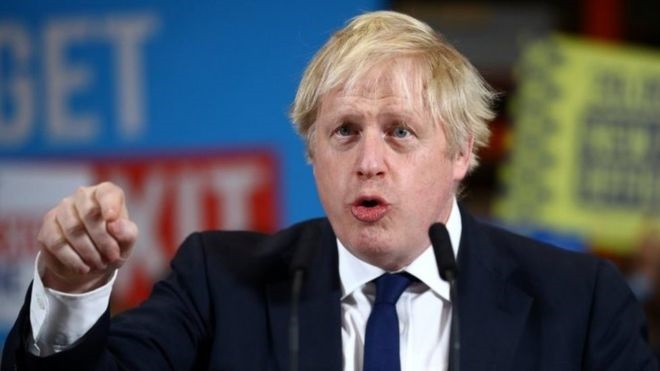
UK Prime Minister Boris Johnson is set to call for Nato unity amid growing tensions within the military bloc.
A summit to mark the founding of the 29-member defence alliance 70 years ago gets under way near London on Tuesday.
The gathering is overshadowed by a bitter row between France and Turkey, and a continuing debate over money.
Last month, French President Emmanuel Macron described Nato as "brain dead", saying alliance members were no longer co-operating on a range of key issues.
US President Donald Trump, who has repeatedly clashed with Nato's European members over the funding of the bloc, is among world leaders attending.
He arrived in the UK on Monday ahead of a reception to be hosted by the Queen at Buckingham Palace on Tuesday evening. Mr Trump is set to hold separate talks with the German and French leaders, and Nato's secretary-general.
Nato members pledge to come to the aid of one another should any of the allies come under attack.
What will Boris Johnson say?
As host of the two-day summit, Mr Johnson is expected to reiterate the importance of Nato staying united.
"The PM's position is that Nato is the most enduring and successful alliance in military history and that it continues to adapt to the evolving threats that we face," the prime minister's spokesman said.
"It is the cornerstone of Euro-Atlantic security and it helps to keep a billion people safe.
"The PM will emphasise that all members must be united behind shared priorities so Nato can adapt to the challenges ahead," the spokesman added.
Tensions have grown since the election of President Trump, who has repeatedly complained that Europe's Nato members are not contributing enough to the alliance.
Ahead of his visit, he tweeted to take credit for a recent commitment by Nato Secretary-General Jens Stoltenberg to increase spending levels.
Nato estimates for 2019 show there are now eight countries - in addition to the US - meeting the target agreed by all Nato members to spend 2% or more of their gross domestic product (GDP, a measure of economic output) on defence.
Mr Stoltenberg said on Friday that by 2020, European allies and Canada would have invested $130bn more since 2016 - the year Present Trump was elected.
What are the other issues?
In an interview a month ago, Mr Macron described Nato as "brain dead" - stressing what he saw as a waning commitment to the transatlantic alliance by its main guarantor - Washington.
He cited the US failure to consult the alliance before pulling forces out of northern Syria in October, which cleared the way for Turkey - another Nato member - to push into Kurdish-controlled areas to create a "security zone" along its border.
That military action deepened fractures between Turkey and other Nato members.
Last Friday, Turkish President Recep Tayyip Erdogan hit back, suggesting that Mr Macron was in fact the one who was "brain dead". He accused him of "a sick and shallow understanding" of terrorism.
President Macron had also angered Turkey by in November hosting an official from the Kurdish-led Syrian Democratic Forces (SDF). Turkey views a section of the group - the YPG - as terrorists and wants Nato to recognise them as such.
Both Mr Macron and Mr Erdogan will be attending the Nato event and will be hosted, alongside German Chancellor Angela Merkel, by Mr Johnson at Downing Street on Tuesday.
Ahead of the anniversary summit US Defence Secretary Mark Esper urged Turkey to stop holding support for a Nato defence plan for the Baltics and Poland as it attempted to gain support for its effort in northern Syria.
"Alliance unity, alliance readiness, means that you focus on the bigger issues... And not everybody's willing to sign up to their agenda. Not everybody sees the threats that they see." he told Reuters news agency.






Monday, 27 July 2026 - 9:40
After years dominated by hyper-saturated trend cycles and sleek, ultra-smooth minimalism, fashion has...

Monday, 20 July 2026 - 9:35
The era of hyper-rigid seasonal dress codes has quietly dissolved. Where personal style once demanded...

Monday, 08 June 2026 - 18:35
There was a time when sleek, unadorned surfaces and flat printed graphics defined what it meant to be...



Tuesday, 25 August 2026
Thursday, 13 August 2026
Wednesday, 05 August 2026


Tuesday, 18 August 2026

Tuesday, 28 July 2026

Monday, 20 July 2026

Friday, 15 May 2026