
Latest News

58,000 Hours Of Work Required to Bring All Boeing 737 MAX Aircraft Back Into Service
Tuesday, 28 May 2019 - 13:35 | Views - 748
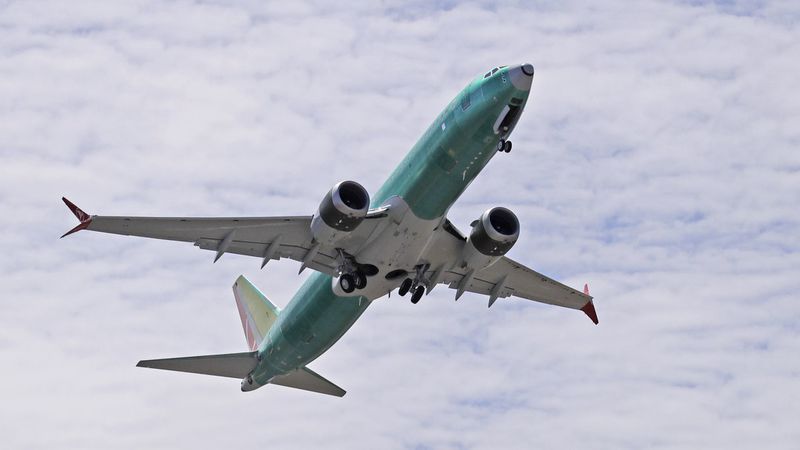
There’s some optimism that the 737 MAX could be back in the air in the near future. But news coming out of the United States in the last week suggests this optimism could be misplaced.
In the latest of a series of dispatches about the 737 MAX, Reuters reports it is going to take up to 150 hours of work to get each grounded 737 MAX back in the air. With 387 aircraft sitting idle around the world, that’s 58,000 hours. This figure does not include pilot training.
Each grounded aircraft needs to be checked, its fluids changed, engines tested, and the new software fix uploaded and run through – presumably very thoroughly. It will be a time consuming and expensive process.
Boeing’s 737 Max remains grounded.
At the time of writing, Boeing had shown its new software fix to the FAA and other aviation regulatory bodies, but the software had not been formally submitted to the FAA for approval. Despite this, there has been some optimism that the 737 MAX could be back in the air in the USA by the end of June.
The FAA faces criticism
In the wake of the FAA facing strong criticism for its handling of the 737 MAX’s grounding and questions surrounding the initial certification of the 737 MAX, the FAA’s Acting Administrator, Dan Elwell, remains confident that the grounding will end sooner rather than later but declines to lay out a timetable for its lifting.
Airlines are keen for Boeing to resolve issues around the troubled aircraft with some CEO’s publicly stating their confidence in the MAX .
A factor impeding a swift decision to lift the grounding is whether the FAA rushed the initial certification process in the first place. This is currently under investigation by the US Congress and Department of Transport.
Icelandair is one of the many airline that have grounded the Boeing 737 MAX.
Some have questioned whether an under resourced FAA gave Boeing too much leeway when first certifying the 737 MAX. The Economist reports that steps in the certification process was often lead by Boeing who were also able to sign off on many of the MAX’s safety features.
When the 737 MAX was first certified, nearly a decade ago, Boeing was facing intense competition from rival Airbus who had started producing the A320neo, a more fuel efficient aircraft than the 737. Boeing was under competitive and financial pressure and questions are being raised about whether the certification process for the 737 MAX was rushed in order to fight back against Airbus.
It is critical for Boeing to get their MAX’s back flying as soon as possible. They are frequently meeting with customer airlines and aviation bodies and putting considerable work into ensuring the MAX’s supply chain can immediately provide the parts needed to smooth the aircraft’s return to the skies. But some carriers are starting to put compensation claims into Boeing, further increasing the pressure on the manufacturer.
It’s not only the FAA that needs to be satisfied
The challenges involved in getting the 737 MAX back in the air have been covered extensively on Simple Flying. But even if the FAA do lift the grounding in the near future there is no guarantee other countries aviation authorities will simply follow the lead of the FAA. The majority (80%) of the world’s 737 MAX’s fly outside the USA and beyond the scope of the FAA.
flydubai’s 737 MAX aircraft are subject to their own country’s regulatory authorities.
Most countries have reliable aviation regulatory bodies and they tend to like to make their own decisions. While there is often a history of co-operation, questions surrounding the efficacy of the FAA in certifying the 737 MAX suggest other countries will be reluctant to merely follow the FAA’s lead without doing thorough checks of their own.
Boeing not only has to satisfy the FAA but the regulatory authorities in every nation that the 737 MAX flies in. In the wake of the crashes and with questions surrounding the FAA, this may not be that simple.
Only when the 737 MAX is cleared to fly again will the time consuming process of re-entering the 737 MAX’s into service begin. For Boeing and the airlines, that moment cannot come soon enough.







Monday, 27 July 2026 - 9:40
After years dominated by hyper-saturated trend cycles and sleek, ultra-smooth minimalism, fashion has...

Monday, 20 July 2026 - 9:35
The era of hyper-rigid seasonal dress codes has quietly dissolved. Where personal style once demanded...

Monday, 08 June 2026 - 18:35
There was a time when sleek, unadorned surfaces and flat printed graphics defined what it meant to be...



Tuesday, 25 August 2026
Thursday, 13 August 2026

Wednesday, 05 August 2026


Tuesday, 18 August 2026

Tuesday, 28 July 2026

Monday, 20 July 2026

Friday, 15 May 2026