
Latest News

How do dogs process words? Brain study investigates
Monday, 22 October 2018 - 16:02 | Views - 998
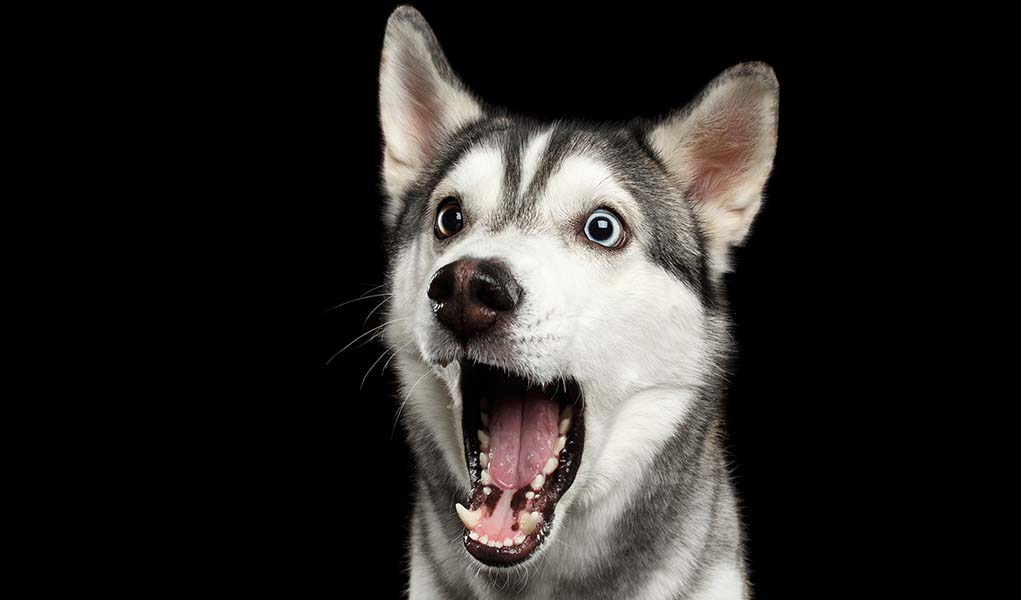
For the first time, scientists trained dogs to sit still inside a brain scanner so they could investigate how the canine brain distinguishes between new and old words.
When science sets out to explore the connection that humans have with their dogs, the results are bound to be fascinating.
For instance, a study Medical News Todayreported on last year found that dogs prefer to ignore danger and look at their owners' smiling faces instead. Oxytocin, the "love hormone" that boosts attachment between humans and between humans and their pets mediates this effect.
On a similar note, another study found that talking to your dog in the same way as you would to your baby increases attachment and bonding.
But what happens inside your dog's brain when you "baby talk" to him? Can dogs tell the meaning of different words apart, and could they tell the difference if you said, "Who's a good banana cake?" instead of, "Who's a good boy?"
In an effort to elucidate some of these mysteries, scientists led by neuroscientist Gregory S. Berns, from the Department of Psychology at Emory University in Atlanta, GA, set out to investigate word processing in the canine brain.
Ashley Prichard, a doctoral candidate in Emory's Department of Psychology, is the first author of the paper, which was published in the journal Frontiers in Neuroscience.
Studying dogs inside a brain scanner
Prichard explains the motivation for the study, saying "Many dog owners think that their dogs know what some words mean, but there really isn't much scientific evidence to support that."
"We wanted to get data from the dogs themselves — not just owner reports," the first author adds.
Senior author Berns continues, "We know that dogs have the capacity to process at least some aspects of human language since they can learn to follow verbal commands."
"Previous research, however, suggests dogs may rely on many other cues to follow a verbal command, such as gaze, gestures, and even emotional expressions from their owners," says the researcher.






Monday, 27 July 2026 - 9:40
After years dominated by hyper-saturated trend cycles and sleek, ultra-smooth minimalism, fashion has...

Monday, 20 July 2026 - 9:35
The era of hyper-rigid seasonal dress codes has quietly dissolved. Where personal style once demanded...
Monday, 08 June 2026 - 18:35
There was a time when sleek, unadorned surfaces and flat printed graphics defined what it meant to be...



Tuesday, 25 August 2026
Thursday, 13 August 2026
Wednesday, 05 August 2026


Tuesday, 18 August 2026

Tuesday, 28 July 2026

Monday, 20 July 2026
Friday, 15 May 2026