
Latest News

The Showdown Between the F-35 and the Russian Weapons Built to Stop It Is Finally Here
Friday, 25 May 2018 - 13:18 | Views - 846
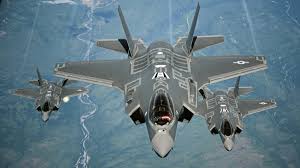
Israel is flying the F-35 into combat, which means the Joint Strike Fighter is up against Russian-built radar and anti-aircraft weapons designed with it in mind.
- Israel has become the first country to fly the F-35 into combat.
- Other countries in the Middle East have Russian-built air defenses intended to spot the F-35 despite its stealth profile.
- This war between American-made planes and Russian-made defenses has been brewing ever since the F-35 was on the drawing board.
We don't know exactly what the F-35 is up to in the Middle East, where Israel says it just became the first country to fly the Joint Strike Fighter into combat. But we do know this: The long awaited, multi-generational showdown between military engineers in Russia and the United States is starting to play out in the Middle East.
These planes—and the equipment that Russia designed to shoot them down—were designed to face each other. As we wrote back in 2012:
As of now, no S-300 surface-to-air weapon has ever been fired at a target in anger. The Lightning II is still in testing, and the debut of its style of networked warfare is years away. Their matchup awaits. Only then will the war of words between detractors, engineers, salesmen, and journalists be settled—in combat, with lives at stake and history in the balance.
Stay tuned, because the matchup is under way.
Stealth or Something Like It
The F-35 has been a lightning rod for critics during its long, turbulent path to becoming the more expensive warplane in history. In addition to American critics lambasting its capabilities and bloated budget, one source of constant critique has been the Russians, who sell anti-aircraft missiles that, according to Russia, can track and destroy stealth targets. Viktor Ozherelev, a division head at the firm Almaz-Antey, even claimed at a 2007 arms show that "the Americans know their stealth program has failed."
That's a bit of hyperbole, but it's true that the Russians have digitized older systems and installed new seekers into warheads, making older equipment more fearsome. Many such upgraded anti-aircraft systems are in Syrian arsenal, including S-200 batteries and the self-propelled Buk-M2E and Pantsir S1. As new equipment enters the battlefields of the Middle East, it carries the potential to change the balance. Digitized radar can link systems together for a better picture of what’s coming, and what’s above.
All of which makes the question of the F-35's stealthiness a life-or-death matter. Engineers designed the F-22 to be unseen at many wavelengths and from many directions. The Lightning II does not offer many radar returns when the waves strike it from the front. But the F-35 does not have the curves of the F-22 Raptor that mask the plane from radar at all angles. When radar comes from the side, the returns are stronger.
Carlo Kopp, an analyst with the group Air Power Australia, has written that the Lightning II is "demonstrably not a true stealth aircraft." He claims radar waves will bounce between the juncture of wing and fuselage in a way that can be detected if the airplane is scanned from any direction but the front. Rival airplane-makers in Europe claim that powerful aircraft radar can spot an F-35 coming—even head-on—if multiple opposing aircraft are cooperatively scanning.







Monday, 27 July 2026 - 9:40
After years dominated by hyper-saturated trend cycles and sleek, ultra-smooth minimalism, fashion has...

Monday, 20 July 2026 - 9:35
The era of hyper-rigid seasonal dress codes has quietly dissolved. Where personal style once demanded...

Monday, 08 June 2026 - 18:35
There was a time when sleek, unadorned surfaces and flat printed graphics defined what it meant to be...



Tuesday, 25 August 2026

Thursday, 13 August 2026

Wednesday, 05 August 2026


Tuesday, 18 August 2026

Tuesday, 28 July 2026

Monday, 20 July 2026

Friday, 15 May 2026