
Latest News

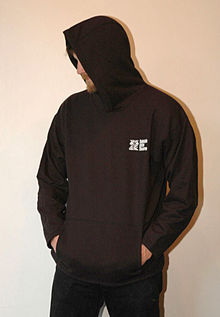
History of the Famous "Hoodie"
Thursday, 31 October 2019 - 15:10 | Views - 1,195
Australia
In June 2011, police in Wynnum, Brisbane, launched a "Hoodie Free Zone" initiative, with shopkeepers encouraged to ask hoodie-wearers to leave. The zone is part of an initiative to educate businesses on how they can avoid armed robberies, in which the hoodie type of clothing is often worn.[8]
Canada
Across Canada, hoodies are a popular clothing item sometimes worn under a coat or jacket to provide an extra layer of clothing during the winter. In the province of Saskatchewan, hoodies without zippers are "bunny hugs."[9]
New Zealand
The "Hoodies on Parliament—politicians challenge youth stereotypes" campaign was launched in May 2008 in New Zealand (NZ) as part of the annual national Youth Week event, a pro-youth initiative organized to challenge youth stereotypes. To launch the campaign, NZ politicians, including National MP Nicky Wagner, Green Party MPs Sue Bradford, Nandor Tanczos and Metiria Turei, and Maori party MP Hone Harawira, wore hoodies while standing on the steps of the country's parliament. Archbishop David Moxon, Archbishop of the Anglican Dioceses, and Brian Turner President of the Methodist Church of NZ also participated in the campaign.[10]
Support and criticism were raised by politicians, who were divided over the 2008 event.[11][12] One strong response was drawn from a local government council member, Dale Evans, who donned a Ku Klux Klan outfit in protest, citing the hoodie as "not an appropriate article of clothing to celebrate."[13]
"Goodie in a Hoodie" day was then run in 2009 by New Zealand Adolescent Health and Development (NZAAHD) in partnership with Age Concern—the organisations used the campaign to highlight the stereotypes that both young people and the elderly face in New Zealand. Liz Baxendine, president of Age Concern at the time, said to the media:
Older people and young people have a lot in common. We both face stereotypes based on our age rather than our real achievements and outlook on life ... we've got to destigmatise the hoodie and see it for what it is. Everyone wears them. We need to take the hoodie back.
United Kingdom
"No hoodies" sign outside a pub in South London
In the UK, hoodies have been the subject of much criticism; some shoplifters have used the hood to conceal their identities from CCTV cameras in shopping centres.[15] The hoodie became a popular clothing item by the 1990s. By the 21st century, it had gained a negative image, being associated with trouble-making teens and anti-social behaviour. It became one of the later items associated with "chavs", or Neds.
Angela McRobbie, professor of communications at Goldsmiths College in the UK, says the appeal of the hoodie is its promise of anonymity, mystery and anxiety. "The point of origin is obviously black American hip-hop culture, now thoroughly mainstream and a key part of the global economy. Leisure and sportswear adopted for everyday wear suggests a distance from the world of office suit or school uniform. Rap culture celebrates defiance, as it narrates the experience of social exclusion. Musically and stylistically, it projects menace and danger as well as anger and rage. The hooded top is one in a long line of garments chosen by young people, usually boys, to which are ascribed meanings suggesting that they are 'up to no good'. In the past, such appropriation was usually restricted to membership of specific youth cultures—leather jackets, bondage trousers—but nowadays it is the norm among young people to flag up their music and cultural preferences in this way, hence the adoption of the hoodie by boys across the boundaries of age, ethnicity and class."[16]
In May 2005, Bluewater shopping centre in Kent caused outrage by launching a code of conduct which bans its shoppers from sporting hoodies or baseball caps, although the garments remain on sale. John Prescott welcomed the move, stating that he had felt threatened by the presence of hooded teenagers at a motorway service station.[16] Then-Prime Minister Tony Blair openly supported this stance and vowed to clamp down on the anti-social behaviour with which hoodie-wearers are sometimes associated. London-based rapper Lady Sovereign published a single titled "Hoodie" in protest as part of a "Save the Hoodie" campaign.[17]
In 2005, Coombeshead College in the south-west of England allowed the hoodie to become part of the boys' school uniform, but the hood could be put up only when it rained. The principal, Richard Haigh, stated that the move would help to calm some of what he called the "hysteria" surrounding the garment.[18]
The JCB Academy allows hoodies, but only a navy blue type sold in the school shop.
In February 2006, a 58-year-old teacher who was wearing a hooded top was asked to remove it when entering a Tesco store in Swindon. According to the teacher, she was wearing the hood because "my hair's a mess". The store did not have a hoodie policy. The shop apologized and said it was taking action to "make sure this doesn't happen again."[19]
In July 2006, David Cameron, leader of the Conservative Party, made a speech suggesting that the hoodie was worn more for defensive than offensive purposes.[20] The speech was referred to as "hug a hoodie" by the Labour Party.[21][22]
Despite the controversy, the hoodie has been embraced by people from all backgrounds. Zara Phillips, a member of the British royal family, has included hoodies in her range of equestrian clothing at Musto.[23]






Monday, 27 July 2026 - 9:40
After years dominated by hyper-saturated trend cycles and sleek, ultra-smooth minimalism, fashion has...

Monday, 20 July 2026 - 9:35
The era of hyper-rigid seasonal dress codes has quietly dissolved. Where personal style once demanded...
Monday, 08 June 2026 - 18:35
There was a time when sleek, unadorned surfaces and flat printed graphics defined what it meant to be...



Tuesday, 25 August 2026
Thursday, 13 August 2026
Wednesday, 05 August 2026


Tuesday, 18 August 2026

Tuesday, 28 July 2026

Monday, 20 July 2026
Friday, 15 May 2026