
Latest News

Expressive Clothing, T-shirts!
Monday, 09 April 2018 - 8:57 | Views - 1,020

When a virile, brooding Marlon Brando shouted “Stella!” in the 1951 film adaptation of A Streetcar Named Desire, he wasn’t just beckoning his lover, but also heralding – at the top of his lungs – the birth of a fashion icon. While the T-shirt has indeed come a long way from its rise to popularity in the 50s, it has also, in more ways than one, remained the same.
Nearly 70 years after Brando sported one as Stanley Kowalski, and over a century after its advent, what is now a universal fashion staple is the focus of Cult – Culture – Subversion, a major new exhibition at London’s Fashion and Textile Museum. A collaboration between the museum and The Civic in Barnsley, it takes a comprehensive look at the evolution of the T-shirt from its early days to the present, through a plethora of garments, photographs, ephemera, and other archival material sourced predominantly from private collections.
While the garment’s history is a highlight of the exhibition, it isn’t the focus; rather, curator Dennis Nothdruft and team have decided to showcase – as per the show’s title – the various subcultures that have surrounded the T-shirt, as well as its power as a socio-political medium. “It feels quite relevant … it was a matter of the personal as politicised,” says Nothdruft in reference to the exhibition’s premise. “[The T-shirt] is a really basic way of telling the world who and what you are.”
Although T-shirt-like garments, such as the tunic, date back to ancient times, it was only recently (relatively speaking) that the T-shirt as it is now known first appeared. Its origins lie in the ‘union suit’, a sort of button-down onesie worn by both men and women (but particularly male workers) towards the end of the 19th Century in the US. Effective at keeping one toasty in colder temperatures, it wasn’t exactly suited towards heat or warm weather. Frustrated with its design, workers cut them in half, tucking the top bit into the bottom.
Shortly afterwards, the Cooper Underwear Company began marketing the tops — sans buttons — as ‘bachelor undershirts’ (as there was no need to resew buttons back into place), and in 1913, they became a part of the uniform of the US Navy, where they were known as ‘lightweight short-sleeve white cotton undervests’.
Until the 20s, the T-shirt was called by every name but its own. Things changed, however, with the publication of F Scott Fitzgerald’s 1920 novel This Side of Paradise, which marked the first-ever appearance of the name. In the same year, it also happened to find its way into Merriam-Webster’s dictionary. “So early in September Amory,” the author wrote of his protagonist, “provided with ‘six suits summer underwear, six suits winter underwear, one sweater or T-shirt, one jersey, one overcoat, winter, etc,’ set out for New England, the land of schools.”
Although the tees worn by Amory could, in the 30s, be found in department stores throughout the States, as well as seen all around American high-schools in the 40s, it wasn’t until heart throbs like Brando in A Streetcar Named Desire and James Dean in 1955’s Rebel Without a Cause rocked them on the silver screen that the T-shirt truly became the T-shirt, no matter how plain and simple it still was. Prior to this, the T-shirt was, by and large, an undergarment meant to be worn beneath one’s ‘proper’ clothes, and was seldom regarded as an article in its own right. “It’s just a white T-shirt, but it already has that kind of disruptive potential,” Nothdruft says of the kind worn by Brando and Dean. “It was rebellious, because [T-shirts] were actually undergarments … It was a tough political statement.” More than they could have ever imagined, Brando and Dean nailed the style and spirit of what had thitherto been an unassuming piece of underwear to a tee.






Monday, 27 July 2026 - 9:40
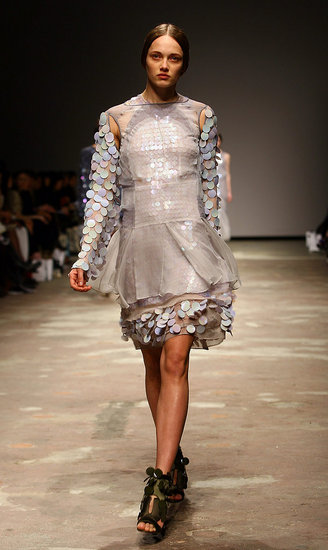
After years dominated by hyper-saturated trend cycles and sleek, ultra-smooth minimalism, fashion has...

Monday, 20 July 2026 - 9:35
The era of hyper-rigid seasonal dress codes has quietly dissolved. Where personal style once demanded...
Monday, 08 June 2026 - 18:35
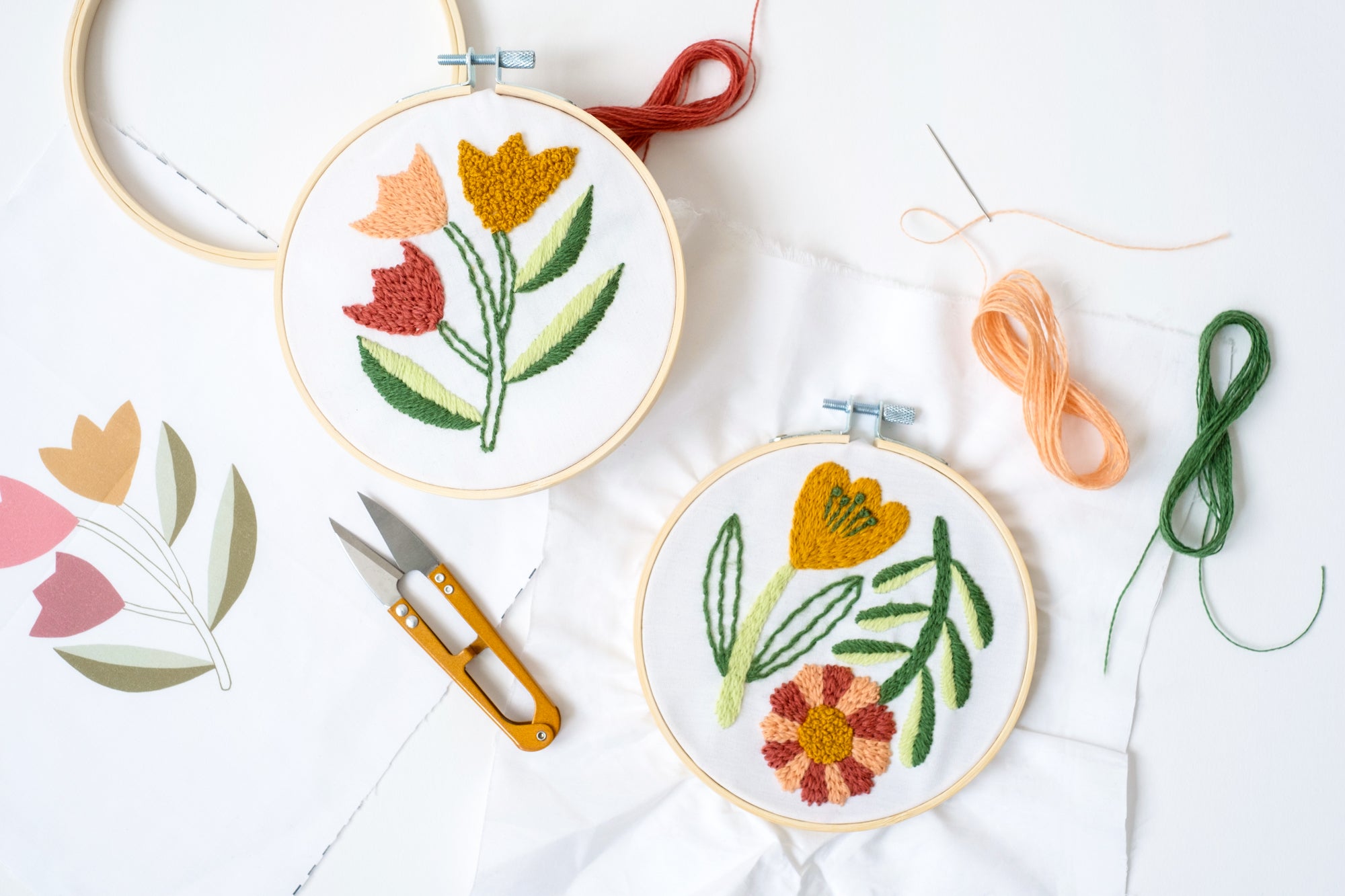
There was a time when sleek, unadorned surfaces and flat printed graphics defined what it meant to be...



Tuesday, 25 August 2026

Thursday, 13 August 2026

Wednesday, 05 August 2026


Tuesday, 18 August 2026

Tuesday, 28 July 2026

Monday, 20 July 2026

Friday, 15 May 2026