
Latest News

‘Circular’ fashion: greenwashing myth, or attainable goal?
Thursday, 23 September 2021 - 20:31 | Views - 710

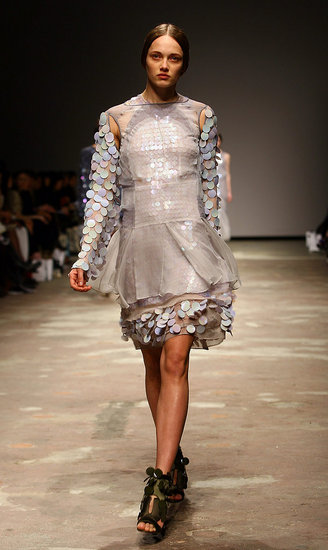
Circularity – a concept drawing on principles such as “designing out” waste and ensuring clothing can be remade again and again – is the buzzword at London fashion week.
At Preen by Thornton Bregazzi, the designers Justin Thornton and Thea Bregazzi spliced together clashing rolls of floral fabric “that had been hanging around in the studio, left over from different seasons” and designed one entirely new look.
The dress, with pink blossom above the waist, multicoloured wildflowers below and two further floral prints on the back – accessorised, for London fashion week, with a space-age black visor edged with a neoprene frill – allowed the duo scope to be creative and offer customers a new look, while reducing their environmental footprint.
But a new documentary warns that circularity may not be an effective strategy for sustainability – as it has been billed in some quarters – when applied to mass-produced clothes, which account for the vast majority of the fashion industry.
“The clothes you see at London fashion week have a good chance of having a decent life,” said Veronica Bates Kassatly, an independent analyst of sustainability claims, at a screening of Fashionscapes: A Circular Economy.






Monday, 27 July 2026 - 9:40
After years dominated by hyper-saturated trend cycles and sleek, ultra-smooth minimalism, fashion has...

Monday, 20 July 2026 - 9:35
The era of hyper-rigid seasonal dress codes has quietly dissolved. Where personal style once demanded...
Monday, 08 June 2026 - 18:35
There was a time when sleek, unadorned surfaces and flat printed graphics defined what it meant to be...



Wednesday, 23 September 2026

Tuesday, 25 August 2026
Thursday, 13 August 2026


Tuesday, 18 August 2026

Tuesday, 28 July 2026

Monday, 20 July 2026

Friday, 15 May 2026