
Latest News

Shipwreck Diplomacy? The Dangerous Gamble of Sri Lanka’s 'Unbalanced' Foreign Policy
Wednesday, 21 January 2026 - 18:04 | Views - 126
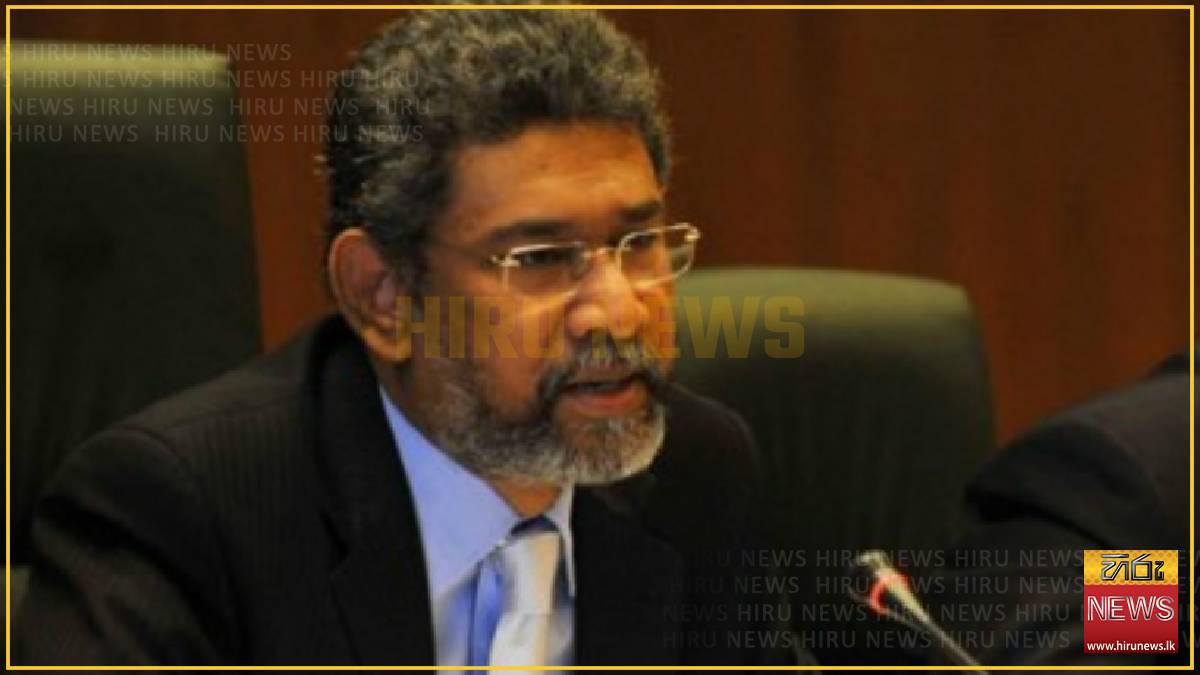
Dr. Dayan Jayatilleka, the veteran diplomat who served as Sri Lanka’s Ambassador to Russia, France, and the United Nations, has issued a sharp warning regarding the current administration’s approach to global power dynamics. In a period of increasing international turbulence—marked by "bullying tactics" and the aggressive posture of superpowers—Dr. Jayatilleka argues that the nation’s refusal to maintain a "balancing act" is a dangerous gamble.
Dr. Jayatilleka expressed deep disappointment regarding President Dissanayake’s recent interview with Newsweek magazine, specifically the leader's statement that he does not believe in the principle of "balancing" between competing interests.
The diplomat warns that when global powers like the US and China or regional rivals like India and China are in competition, abandoning the principle of balance leaves a small state without a functional strategy. He argues that by simply signing agreements with one party to satisfy immediate demands, a nation inevitably signs something that will be objected to by another ally. Jayatilleka draws a stark comparison to maritime safety, noting that whenever Sri Lanka adhered to a balanced policy, it thrived. He likened the current rejection of this principle to a ship captain who claims he does not care if his vessel is balanced even as it sails directly into a storm.
Addressing the rising threat of superpower aggression, Dr. Jayatilleka asserts that small states cannot afford to remain passive. Drawing on Sri Lanka’s historical leadership roles within the United Nations, he argues that the country must once again play an initiatory role on the global stage.
Because small nations are uniquely threatened when great powers begin to seize territory or influence, Jayatilleka believes the first line of defense must be a firm commitment to the principles of the United Nations Charter. By defending these core tenets against aggression and the trampling of sovereignty, and by forming broad alliances with other small states, Sri Lanka can effectively "raise the bar" against global bullying.
The warning concludes with a forecast of a "triple collision" involving the global system, the volatility of the Middle East, and Sri Lanka's own internal economic crisis. Dr. Jayatilleka points specifically to the looming danger of an attack on Iran, which he predicts would cause global oil prices to skyrocket.
For a country that has already struggled to secure necessary debt concessions, such an economic shock would be devastating. He maintains that the current leadership must correct its strategic thinking to avoid isolation. To survive this worsening global storm, Jayatilleka urges the government to find like-minded states and adopt a policy that balances the interests of great powers while remaining anchored in the principles of international law.
Dr. Jayatilleka concluded that Sri Lanka is currently on a collision course where internal economic mismanagement meets international systemic turbulence. He emphasized that passive or unbalanced diplomacy will only accelerate the country's vulnerability to external shocks, urging a shift toward a more proactive, principled, and balanced foreign policy.
Dr. Jayatilleka expressed deep disappointment regarding President Dissanayake’s recent interview with Newsweek magazine, specifically the leader's statement that he does not believe in the principle of "balancing" between competing interests.
The diplomat warns that when global powers like the US and China or regional rivals like India and China are in competition, abandoning the principle of balance leaves a small state without a functional strategy. He argues that by simply signing agreements with one party to satisfy immediate demands, a nation inevitably signs something that will be objected to by another ally. Jayatilleka draws a stark comparison to maritime safety, noting that whenever Sri Lanka adhered to a balanced policy, it thrived. He likened the current rejection of this principle to a ship captain who claims he does not care if his vessel is balanced even as it sails directly into a storm.
Addressing the rising threat of superpower aggression, Dr. Jayatilleka asserts that small states cannot afford to remain passive. Drawing on Sri Lanka’s historical leadership roles within the United Nations, he argues that the country must once again play an initiatory role on the global stage.
Because small nations are uniquely threatened when great powers begin to seize territory or influence, Jayatilleka believes the first line of defense must be a firm commitment to the principles of the United Nations Charter. By defending these core tenets against aggression and the trampling of sovereignty, and by forming broad alliances with other small states, Sri Lanka can effectively "raise the bar" against global bullying.
The warning concludes with a forecast of a "triple collision" involving the global system, the volatility of the Middle East, and Sri Lanka's own internal economic crisis. Dr. Jayatilleka points specifically to the looming danger of an attack on Iran, which he predicts would cause global oil prices to skyrocket.
For a country that has already struggled to secure necessary debt concessions, such an economic shock would be devastating. He maintains that the current leadership must correct its strategic thinking to avoid isolation. To survive this worsening global storm, Jayatilleka urges the government to find like-minded states and adopt a policy that balances the interests of great powers while remaining anchored in the principles of international law.
Dr. Jayatilleka concluded that Sri Lanka is currently on a collision course where internal economic mismanagement meets international systemic turbulence. He emphasized that passive or unbalanced diplomacy will only accelerate the country's vulnerability to external shocks, urging a shift toward a more proactive, principled, and balanced foreign policy.







Monday, 19 October 2026 - 10:25
The sixth annual Academy Museum Gala lit up Los Angeles as stars gathered in support of the Academy Museum...

Monday, 12 October 2026 - 12:07
Paris Fashion Week SS27 has officially declared minimalism over, ushering in a breathtaking era of high-impact...

Monday, 05 October 2026 - 11:00
Paris Fashion Week has been nothing short of a whirlwind, turning the French capital into the ultimate...



Thursday, 15 October 2026

Wednesday, 07 October 2026

Thursday, 01 October 2026


Friday, 16 October 2026

Wednesday, 07 October 2026

Thursday, 01 October 2026

Tuesday, 18 August 2026