
Latest News

Thailand's repatriation of elephant's
Wednesday, 29 October 2025 - 15:53 | Views - 239
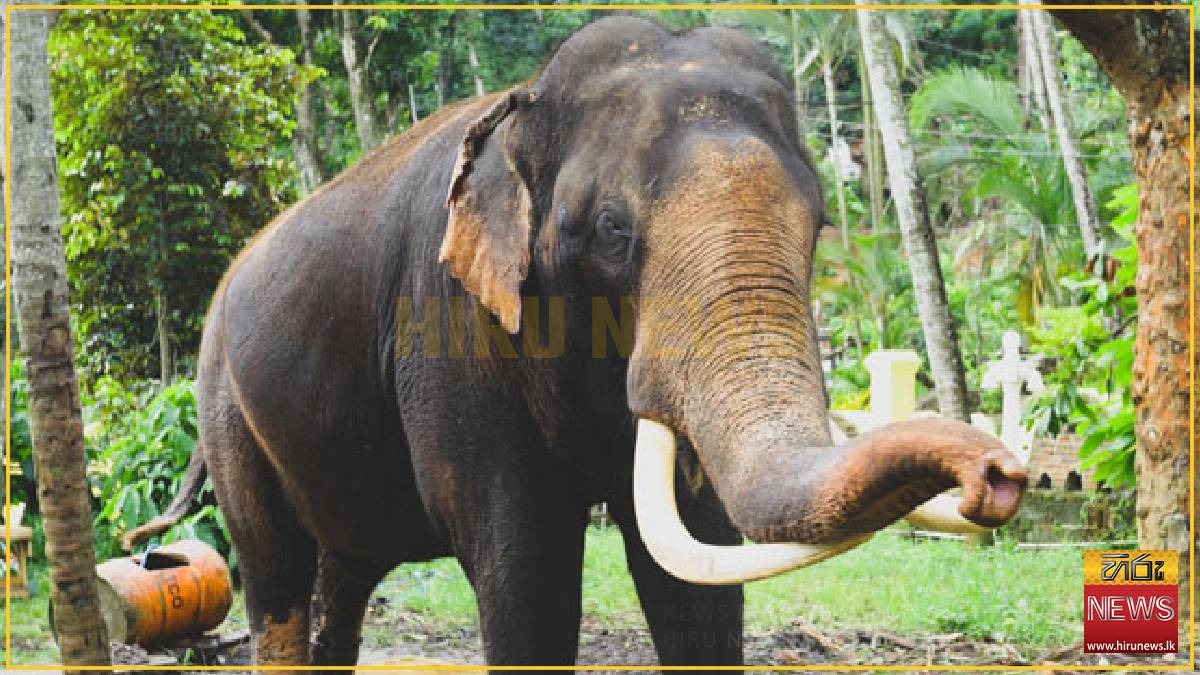
The chief veterinarian at the Temple of the Sacred Tooth Relic in Kandy has denied reports that a Thai elephant under his care is unwell, following Bangkok's announcement that it intends to repatriate two elephants gifted to Sri Lanka decades ago.
Denial of poor health reports
Professor Ashoka Dangolla, head of the temple's elephant stables and the chief veterinary surgeon, asserted that the tusker Plai Pratu Pha is in good health and receiving proper care.
"I have not seen or heard of any requests from Thailand regarding these two elephants. Out of the two, the one in the Temple of the Sacred Tooth Relic in Kandy is directly under my supervision. I am the chief veterinary surgeon," Professor Dangolla said.
He provided a detailed assessment of the elephant’s condition, noting the challenges and the comprehensive care provided:
"The tusker gets additional care, and you can't get near him. You cannot do blood sampling, for example. But his health is up to the mark. There are four different methods of measuring body condition in elephants, and according to all four methods, its body condition is very much acceptable. Vets from Thailand have come to examine this elephant twice, and both times the vets were happy about the health condition. We keep maintaining good files about every elephant belonging to the Temple of the Sacred Tooth Relic, and that includes this Thai tusker also. So my opinion, which is backed by the lab reports of blood, urine and faeces, is that the Thai tusker in The Temple of the Sacred Tooth Relic is in good health condition."
Thailand's repatriation plan
Thailand’s government announced it would open negotiations with Sri Lanka to bring home Plai Pratu Pha and another elephant, Plai Srinharong, for medical treatment amid mounting concern over their well-being.
Plai Pratu Pha was the first elephant gifted by Thailand in 1979 and resides at the Temple of the Sacred Tooth Relic.
Plai Srinharong was sent in 2001.
Thailand’s official news agency reported that the Deputy Prime Minister and Minister of Natural Resources and Environment plans to travel to Sri Lanka to discuss the elephants’ condition and will likely be accompanied by the Director of the Department of National Parks, Wildlife and Plant Conservation.
A bilateral meeting between Thai and Sri Lankan officials, along with conservation organisations, is scheduled for October 28 in Bangkok to review the animals’ health and living conditions.
Comparison to Muthu Raja's return
The move by Thailand follows pressure from Thai conservation groups, echoing the circumstances surrounding the high-profile return of Plai Sak Surin—also known as Muthu Raja—who was repatriated from Sri Lanka after reports of injury and poor care.
Although his return was initially described as temporary for medical treatment, he was later confirmed to remain in Thailand permanently.
Professor Dangolla acknowledged the fundamental differences in animal management practices between the two countries.
"Now Sri Lankans and Thais, there is a basic difference in the way we manage them. We prefer elephants to have food all the time. Food is very much in excess of what they require. But in Thailand, they calculate and give food only the bare minimum amount that they require. We give water frequently, more frequently than they give water. We believe that elephants need more water all the time to drink and also to bathe. Bathe much longer. immersed in water is essential, we believe. But Thais don't believe that. We only give in excess so that they can play around, throw around, chase flies off, all that. Thais do not immerse elephants in water. They only bathe them using a hosepipe," he highlighted.
Cultural and political implications
Professor Dangolla warned that reclaiming the tusker would severely impact Sri Lankan culture:
"The Thai tusker makes a significant contribution to our fleet of tuskers in the Temple. If he is taken away, I think we will definitely feel it because we have only very few tuskers who can carry the casket of Lord Buddha's tooth relic. Definitely, our culture will feel it. I think if it is taken away, like what happened to Muthuraja, it will have a substantial impact on our culture more than the religion."
Meanwhile, some observers in Thailand have questioned the timing of the government's announcement, noting that it comes shortly after the country confirmed its next general election dates. Critics suggest the renewed focus on the elephants' welfare could be politically motivated—aimed at appealing to public sentiment ahead of the polls, mirroring the circumstances surrounding Muthu Raja's repatriation.
Between 1980 and 2016, Thailand sent 20 elephants abroad as symbols of friendship. The Thai government no longer permits elephant exports, and future exchanges are subject to strict welfare standards. For Sri Lanka, where elephants hold a central place in national culture and religion, any potential repatriation remains a deeply emotional and diplomatic issue.
Denial of poor health reports
Professor Ashoka Dangolla, head of the temple's elephant stables and the chief veterinary surgeon, asserted that the tusker Plai Pratu Pha is in good health and receiving proper care.
"I have not seen or heard of any requests from Thailand regarding these two elephants. Out of the two, the one in the Temple of the Sacred Tooth Relic in Kandy is directly under my supervision. I am the chief veterinary surgeon," Professor Dangolla said.
He provided a detailed assessment of the elephant’s condition, noting the challenges and the comprehensive care provided:
"The tusker gets additional care, and you can't get near him. You cannot do blood sampling, for example. But his health is up to the mark. There are four different methods of measuring body condition in elephants, and according to all four methods, its body condition is very much acceptable. Vets from Thailand have come to examine this elephant twice, and both times the vets were happy about the health condition. We keep maintaining good files about every elephant belonging to the Temple of the Sacred Tooth Relic, and that includes this Thai tusker also. So my opinion, which is backed by the lab reports of blood, urine and faeces, is that the Thai tusker in The Temple of the Sacred Tooth Relic is in good health condition."
Thailand's repatriation plan
Thailand’s government announced it would open negotiations with Sri Lanka to bring home Plai Pratu Pha and another elephant, Plai Srinharong, for medical treatment amid mounting concern over their well-being.
Plai Pratu Pha was the first elephant gifted by Thailand in 1979 and resides at the Temple of the Sacred Tooth Relic.
Plai Srinharong was sent in 2001.
Thailand’s official news agency reported that the Deputy Prime Minister and Minister of Natural Resources and Environment plans to travel to Sri Lanka to discuss the elephants’ condition and will likely be accompanied by the Director of the Department of National Parks, Wildlife and Plant Conservation.
A bilateral meeting between Thai and Sri Lankan officials, along with conservation organisations, is scheduled for October 28 in Bangkok to review the animals’ health and living conditions.
Comparison to Muthu Raja's return
The move by Thailand follows pressure from Thai conservation groups, echoing the circumstances surrounding the high-profile return of Plai Sak Surin—also known as Muthu Raja—who was repatriated from Sri Lanka after reports of injury and poor care.
Although his return was initially described as temporary for medical treatment, he was later confirmed to remain in Thailand permanently.
Professor Dangolla acknowledged the fundamental differences in animal management practices between the two countries.
"Now Sri Lankans and Thais, there is a basic difference in the way we manage them. We prefer elephants to have food all the time. Food is very much in excess of what they require. But in Thailand, they calculate and give food only the bare minimum amount that they require. We give water frequently, more frequently than they give water. We believe that elephants need more water all the time to drink and also to bathe. Bathe much longer. immersed in water is essential, we believe. But Thais don't believe that. We only give in excess so that they can play around, throw around, chase flies off, all that. Thais do not immerse elephants in water. They only bathe them using a hosepipe," he highlighted.
Cultural and political implications
Professor Dangolla warned that reclaiming the tusker would severely impact Sri Lankan culture:
"The Thai tusker makes a significant contribution to our fleet of tuskers in the Temple. If he is taken away, I think we will definitely feel it because we have only very few tuskers who can carry the casket of Lord Buddha's tooth relic. Definitely, our culture will feel it. I think if it is taken away, like what happened to Muthuraja, it will have a substantial impact on our culture more than the religion."
Meanwhile, some observers in Thailand have questioned the timing of the government's announcement, noting that it comes shortly after the country confirmed its next general election dates. Critics suggest the renewed focus on the elephants' welfare could be politically motivated—aimed at appealing to public sentiment ahead of the polls, mirroring the circumstances surrounding Muthu Raja's repatriation.
Between 1980 and 2016, Thailand sent 20 elephants abroad as symbols of friendship. The Thai government no longer permits elephant exports, and future exchanges are subject to strict welfare standards. For Sri Lanka, where elephants hold a central place in national culture and religion, any potential repatriation remains a deeply emotional and diplomatic issue.






Monday, 27 July 2026 - 9:40
After years dominated by hyper-saturated trend cycles and sleek, ultra-smooth minimalism, fashion has...

Monday, 20 July 2026 - 9:35
The era of hyper-rigid seasonal dress codes has quietly dissolved. Where personal style once demanded...
Monday, 08 June 2026 - 18:35
There was a time when sleek, unadorned surfaces and flat printed graphics defined what it meant to be...


Thursday, 13 August 2026

Wednesday, 05 August 2026

Thursday, 30 July 2026


Tuesday, 18 August 2026
Tuesday, 28 July 2026

Monday, 20 July 2026

Friday, 15 May 2026