
Latest News

Mysterious rumblings were recorded in Earth’s stratosphere
Friday, 12 May 2023 - 11:53 | Views - 715
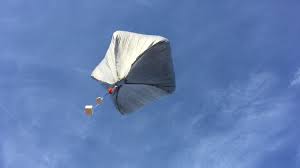
Giant solar balloons were sent 70,000 feet up in the air to record sounds of Earth’s stratosphere — and the microphones picked up some unexpected sounds.
The stratosphere is the second layer of Earth’s atmosphere, and its lower level contains the ozone layer that absorbs and scatters the sun’s ultraviolet radiation, according to NASA. The thin, dry air of the stratosphere is where jet aircraft and weather balloons reach their maximum altitude, and the relatively calm atmospheric layer is rarely disturbed by turbulence.
Daniel Bowman, principal scientist at Sandia National Laboratories in New Mexico, was inspired in graduate school to explore the soundscape of the stratosphere after being introduced to the low-frequency sounds that are generated by volcanoes. Known as infrasound, the phenomenon is inaudible to the human ear.
Bowman and his friends had previously flown cameras on weather balloons “to take pictures of the black sky above and the Earth far below” and successfully built their own solar balloon.
He proposed attaching infrasound recorders to balloons to record the sounds of volcanoes. But then he and his adviser Jonathan Lees of the University of North Carolina, Chapel Hill, “realized that no one had tried to put microphones on stratospheric balloons for half a century, so we pivoted to exploring what this new platform could do,” Bowman said. Lees is a professor of Earth, marine and environmental sciences who researches seismology and volcanology.
The balloons can take sensors twice as high as commercial jets can fly.
“On our solar balloons, we have recorded surface and buried chemical explosions, thunder, ocean waves colliding, propeller aircraft, city sounds, suborbital rocket launches, earthquakes, and maybe even freight trains and jet aircraft,” Bowman said via email. “We’ve also recorded sounds whose origin is unclear.”
The findings were shared Thursday at the 184th Meeting of the Acoustical Society of America in Chicago.
A recording shared by Bowman from a NASA balloon that circled Antarctica contains infrasound of colliding ocean waves, which sounds like continual sighing. But other crackles and rustling have unknown origins.
In the stratosphere, “there are mysterious infrasound signals that occur a few times per hour on some flights, but the source of these is completely unknown,” Bowman said.







Monday, 27 July 2026 - 9:40
After years dominated by hyper-saturated trend cycles and sleek, ultra-smooth minimalism, fashion has...

Monday, 20 July 2026 - 9:35
The era of hyper-rigid seasonal dress codes has quietly dissolved. Where personal style once demanded...

Monday, 08 June 2026 - 18:35
There was a time when sleek, unadorned surfaces and flat printed graphics defined what it meant to be...



Thursday, 13 August 2026

Wednesday, 05 August 2026

Thursday, 30 July 2026


Tuesday, 18 August 2026

Tuesday, 28 July 2026

Monday, 20 July 2026

Friday, 15 May 2026