
Latest News

Fury as Covid crisis hits Australia's Aboriginal communities
Tuesday, 31 August 2021 - 16:27 | Views - 549
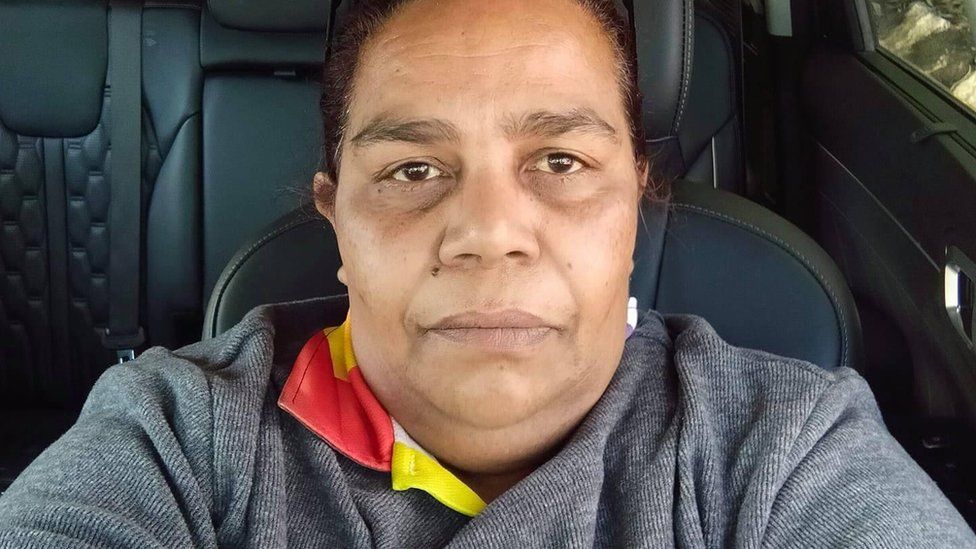
"I am angry. The government did nothing to protect us. They sit in their ivory towers and make decisions on Aboriginal issues."
Monica Kerwin is a Barkindji (First Nation) mother-of-six who lives in Wilcannia, in outback New South Wales.
Her remote town of about 750 people is at the centre of a growing Covid outbreak which has brought to the fore how vulnerable Australia's indigenous people are to the virus.
For most of the pandemic, outbreaks in Australia have mainly hit cities and spared remote areas.
But as the Delta variant has spread from Sydney to western New South Wales (NSW) and elsewhere, Aboriginal communities are seeing Covid infections for the first time.
"We're on edge. The [indigenous] population is just not prepared for this pandemic," says Dr Chaitanya Kada, a doctor based in Lightning Ridge, another outback town.
Dr Kada lists some reasons why a significant outbreak in remote Aboriginal-majority communities is a "recipe for disaster":
- Basic health facilities are not suited to a proper Covid response
- There are staffing problems
- People have disproportionately high chronic disease rates and a low vaccine uptake
- There is often a social make-up that doesn't allow for proper isolation.
Currently, most of the hundreds of people infected in the western NSW outbreak are Aboriginal. Its first death - an Aboriginal man - was confirmed on Monday.
In Wilcannia, more than 60 people have tested positive. Adjusted for population size, that's the highest proportion for anywhere in NSW.
'No one listened to us'
The town's outbreak started at a funeral on 13 August that was attended by more than 100 people, some from other regional areas. It did not breach any public health orders because Wilcannia was not in lockdown at the time.
Nonetheless NSW Health Minister Brad Hazzard described the gathering as "selfish" at a state-wide press conference, provoking anger from the community and the family of the deceased. Mr Hazzard later expressed regret for his comments.
Health authorities remain worried, however, that those mourners could have unintentionally infected people in other communities.
The situation has infuriated locals. Ms Kerwin says she and others had previously asked authorities to seal off Wilcannia to keep it safe.
"We were watching what was happening in other communities. We were watching it [the virus] getting closer," she said.
"We've been crying out for prevention. No one listened to us."
Brendon Adams, who's lived in Wilcannia for 20 years, says there was always a risk of infections arriving in the town because it sits on a major highway.
"The vehicles would stop in Wilcannia and [passengers] would use our public toilets, our takeaways, our one shop or petrol station - which puts our community at risk," he says.
Vaccination rates are a big concern as they remain disproportionately low among indigenous people.
About 33% of all eligible Australians have been fully vaccinated. Data for indigenous Australians is not as easily available, but The Guardian reported on Saturday it was 16% for Aboriginal people in the region that includes Wilcannia.
"I think it's the fear and mistrust," says Amanda Kelly, an indigenous nurse based in the town of Orange.
She adds that Aboriginal people have a historical mistrust of the government and the health system for past wrongs, and that this has contributed to a slow vaccine uptake.
But Ms Kelly says many remote clinics have also had difficulties getting enough vaccine doses.
Mr Adams, who runs the local radio station, says their broadcasts emphasise the importance of staying home, testing and getting jabs. This includes fighting misinformation around the vaccines.
"My job is to get them the right information so that they can make the choice themselves," he says.
But Dr Kada says the government has failed in its messaging to indigenous people, causing confusion with changing advice.
"It should have been consistent and simple. Especially around AstraZeneca," he says.







Monday, 27 July 2026 - 9:40
After years dominated by hyper-saturated trend cycles and sleek, ultra-smooth minimalism, fashion has...

Monday, 20 July 2026 - 9:35
The era of hyper-rigid seasonal dress codes has quietly dissolved. Where personal style once demanded...
Monday, 08 June 2026 - 18:35
There was a time when sleek, unadorned surfaces and flat printed graphics defined what it meant to be...



Tuesday, 25 August 2026

Thursday, 13 August 2026

Wednesday, 05 August 2026


Tuesday, 18 August 2026

Tuesday, 28 July 2026

Monday, 20 July 2026

Friday, 15 May 2026